Inside the episode
Why these episodes exist
This is the first of the behind-the-scenes episodes, which now run every other week, alternating with the guest interviews. Claire adores the guest episodes, but she also knows that the reality of what happens behind the scenes is something we can all relate to.
Some of it will be specific to marketing or your personal brand. Some of it will be more mindset than anything else. All of it is part of the mix, which is the whole point of the show.
How the mix came together
Claire trained as a hypnotherapist over two or three years and practised in the evenings and at weekends. When Jack was born she was clear that she did not want to go back to full-time work. She wanted to make something of the qualification she had earned, and she wanted to be present for her son without the juggle.
She started with hypnotherapy and built a brand in hypnobirthing, then realised she needed to upskill if she was going to sell her services and create an online business. That sent her knee-deep into digital marketing, and one thing led to another until she was supporting brands with everything she knows about mindset.
It is not so much the hypnotherapy itself. Once you understand how the human mind works, so much of it links into marketing, because marketing is about understanding how humans think. Along the way she worked with smaller brands and some very well-known ones, always directly with the founder, and mostly with service-based experts, authors and speakers.
The label problem
From childhood we are handed labels. He is the academic one, he is the one who is great at football. Later they come from work: I am a doctor, I am a lawyer, I am an accountant. Whatever we are given, or assume for ourselves, becomes part of our identity.
When Claire had Jack she went through a bit of an identity crisis. You become Jack's mum, which is one of her favourite labels, but life changes so much that some of the labels you had before fall away, through practicality or through simply wanting something different.
On top of that she did not know what label to attach to herself. She had built her own thing and learnt it on the hoof, and imposter syndrome played a big part. At a networking event the question 'what do you do?' made her want to go under the table, so she went for the most generic answer anyone could understand: 'I do marketing. Tell me about you.'
The wrong question
She had done all the marketing strategy. She knew what she offered and she knew who her client was. Something still was not clicking, and eventually she started to wonder whether she was asking herself the wrong question altogether.
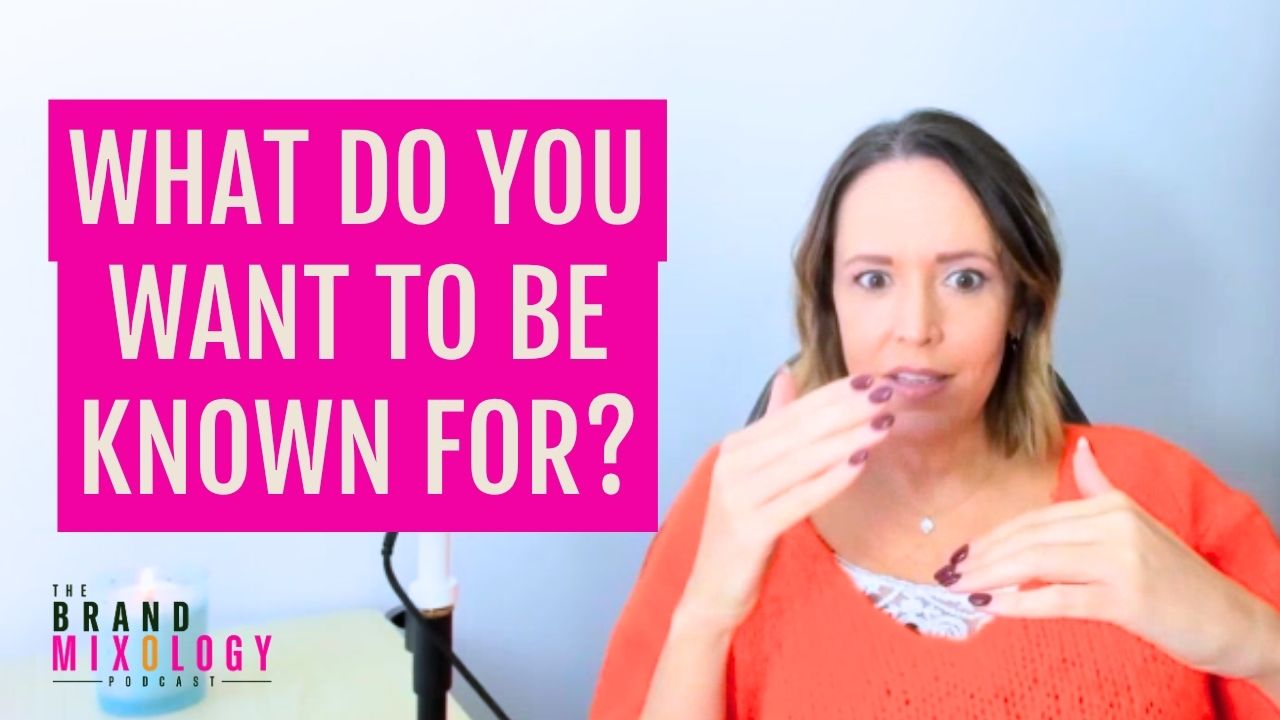
Rather than asking what label to give herself, or what package to tie up with a neat bow, the bigger question was what she wanted to be known for. That brings the work in, but it brings more of life into it too. It becomes a question about the legacy you want to leave, what you want people to be saying about you when you are not in the room, and being intentional about both.
That is essentially what personal brand is. You have one from the day you are born: your personality, the way you speak to the bartender when you order a drink, the way you manage people on your team, the way you interact with your peers, the way you parent. All of it counts. What we are rarely doing is being proactive about what we want that to be, which parts to dial up and which parts to leave alone.
Ask people what they say about you
Claire started putting the question to the people around her, and unfortunately for a few of her friends, she bombarded them with it. What would you say about Claire? The answers were useful because the common ones stood out. Some of them made her think she loved that people saw her that way. Others were lovely to hear but neither here nor there.
You can do the same with your clients. You will always ask for feedback on the work, but asking how people perceive you beyond the work can be just as helpful, because your ideal client is somebody who wants to connect with you as a person.
That exercise is what let her evolve what she does into something more concrete, and Brand Mixology came out of it just over a year ago. Who we are is the mix of all the stuff. The things she used to beat herself up over turned out to be part of the mix as well: distinguishing features, part of what makes her different, and part of what tells the wrong people she is not for them.
Where the marketing comes in
Claire has asked seasoned business owners what they want to be known for, and they pause. They can reel off their mission, their goals and their KPIs without thinking, but this one takes a moment, because it is a lot more about identity. It is deeper work, and it is the starting point she uses with every client.
Understanding the bigger vision and then building the marketing strategy that gets you there is far more powerful than starting with what the website should look like or what an offer should cost. Both matter, but they come second.
Once you have nailed the human element, you can apply it to the digital world. If somebody searched for you, or asked ChatGPT about you, would you be proud of what came up? That is the statement you are aiming at. Then look at what is actually coming up now and where the gap is. That gap is the journey Claire helps founders and experts take, through visibility, through strategy and through the marketing assets needed to get there.
Not a question you answer once
Claire is not at the end of her own answer, and does not expect to be. We are organic, we are human and we evolve all the time, so what she wants to be known for now will probably change. She certainly hopes it has changed from what she would have said at 20.
Accepting that, and revisiting the question with ourselves and with the people around us, is the part that matters. It has been transformational for her, and it is transformational for her clients, which is why it is the first thing she puts on the table.